
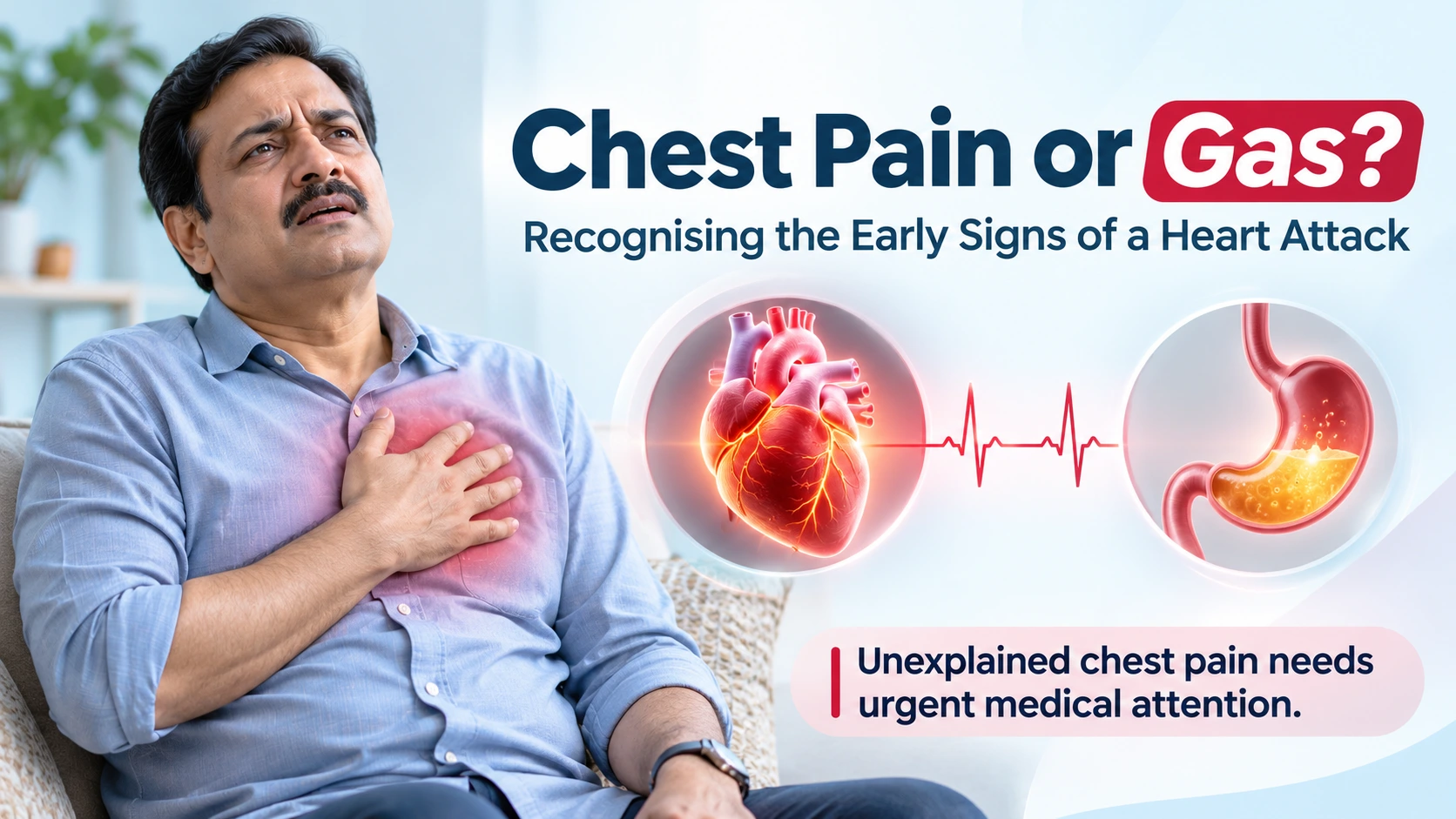
Experiencing sudden chest discomfort can be frightening, especially when it is difficult to understand whether the cause is gastric trouble or a heart-related problem. Many people experience chest pain after eating, during indigestion or due to acid reflux and assume that the discomfort is caused by gas. However, chest pain can also be an early warning sign of a heart attack.
Understanding the difference between chest pain or gas is important because delaying medical attention during a heart attack can lead to serious complications and permanent damage to the heart muscle.
While gastric problems may cause bloating, burning sensations and abdominal discomfort, cardiac chest pain can sometimes feel like acidity, heartburn or indigestion. Recognising the warning signs, understanding associated symptoms and seeking timely medical evaluation can help prevent life-threatening complications.
Chest Pain or Gas: How to Identify the Difference?
Chest discomfort can develop due to several conditions involving the digestive system, heart, lungs or chest muscles. Although some symptoms may provide clues about the underlying cause, it is not always possible to distinguish gastric pain from heart-related pain based on symptoms alone.
What Does Gas Pain in the Chest Feel Like?
Gas-related chest discomfort usually occurs due to trapped gas, bloating, indigestion or acid reflux. It may create pressure or discomfort in the upper abdomen and chest.
Common symptoms include:
- A feeling of fullness or bloating in the stomach.
- Burning sensations in the chest, particularly after meals.
- Frequent burping or passing gas.
- Abdominal discomfort or pressure.
- Acidic or bitter taste in the mouth.
- Discomfort that may change with body position.
Gas-related discomfort may improve after burping, passing gas or taking appropriate treatment for indigestion. However, these patterns cannot reliably rule out a heart problem.
What Does Heart-Related Chest Pain Feel Like?
Chest pain associated with a heart attack occurs when blood flow to a portion of the heart muscle becomes significantly reduced or blocked.
The discomfort may feel like:
- Pressure, tightness or squeezing in the chest.
- A heavy sensation in the centre of the chest.
- Burning or discomfort resembling severe acidity.
- Pain spreading towards the left or right arm.
- Discomfort extending to the jaw, neck, back or upper abdomen.
- Chest discomfort that lasts several minutes or disappears and returns.
Some people experience mild symptoms rather than severe pain. A heart attack can also occur without typical chest pain, particularly in older adults and people with diabetes.
Difference Between Gastric Pain and Heart Attack Symptoms
Understanding the common differences can help identify possible warning signs. However, this comparison is for awareness and should never replace medical evaluation.
| Symptoms | Gas or Acidity | Heart Attack |
| Chest sensation | Burning or pressure | Tightness, squeezing or pressure |
| Common location | Upper abdomen or chest | Centre or left side of chest, sometimes elsewhere |
| Associated symptoms | Bloating, burping and sour taste | Sweating, breathlessness, nausea or dizziness |
| Relation to meals | May occur after eating | Can occur at any time |
| Pain spreading | Usually less common | May spread to arms, jaw, neck or back |
| Duration | May vary | Can last several minutes or come and go |
| Relief | May improve with digestive treatment | Should not be assumed to improve with antacids |
Important: A heart attack can resemble indigestion, and gastric symptoms can overlap with cardiac symptoms. Do not use pain location, burping, response to antacids or symptom duration to rule out a heart attack.
Early Heart Attack Signs You Should Not Ignore
Recognising early heart attack symptoms is essential for getting timely medical attention. Some heart attacks begin suddenly, while others develop gradually with mild discomfort.
Watch out for these warning signs:
1. Chest Pressure or Tightness
One of the most recognised warning signs of a heart attack is discomfort in the centre of the chest.
It may feel like something heavy is pressing against the chest or like a tight band around the upper body. The discomfort may last for several minutes or disappear and return.
2. Pain in the Arms, Neck or Jaw
Heart-related pain may spread beyond the chest because of the way pain signals are transmitted through the nervous system.
You may experience discomfort in:
- One or both arms.
- The shoulders.
- The neck.
- The jaw.
- The upper back.
These symptoms should be taken seriously, especially when accompanied by chest discomfort or breathlessness.
3. Shortness of Breath
Difficulty breathing can be an important warning sign of a heart problem.
Some individuals experience breathlessness along with chest pain, while others may develop it without noticeable chest discomfort.
Sudden or unexplained breathlessness requires immediate medical assessment.
4. Excessive Sweating
Breaking out into a cold sweat without physical exertion or exposure to heat can sometimes indicate a cardiac emergency.
If unusual sweating occurs alongside chest pressure, nausea, dizziness or breathlessness, seek emergency medical help.
5. Nausea, Vomiting or Indigestion-Like Symptoms
A heart attack can sometimes cause symptoms that resemble gastric trouble.
These may include:
- Nausea.
- Vomiting.
- Upper abdominal discomfort.
- A feeling of indigestion.
- Unexplained stomach pressure.
These symptoms can be particularly misleading because people may initially assume that they are experiencing acidity or food-related discomfort.
6. Dizziness, Lightheadedness or Unusual Weakness
A sudden feeling of dizziness, faintness or unexplained weakness may occur during a heart attack.
Some individuals also experience unusual tiredness or difficulty performing routine activities.
These symptoms should not be ignored, particularly when they occur with other possible cardiac warning signs.
Why Can a Heart Attack Feel Like Gas or Acidity?
The heart and digestive system are located close to each other in the chest and upper abdominal region. Because of this, discomfort originating from either system can sometimes feel similar.
During a heart attack, reduced blood supply to the heart muscle can cause chest discomfort that feels like burning, pressure or indigestion.
Additionally, some people experience nausea, vomiting and upper abdominal discomfort during a cardiac event.
This similarity can lead to delayed diagnosis, especially when individuals have previously experienced acidity or gastric problems.
The American Heart Association advises seeking immediate medical attention when it is unclear whether chest discomfort is caused by heartburn or a heart problem.
Who Is at a Higher Risk of Heart Attack?
Certain medical conditions and lifestyle factors can increase the risk of developing cardiovascular disease and experiencing a heart attack.
Important risk factors include:
- High Blood Pressure: Uncontrolled blood pressure can damage blood vessels and increase the workload on the heart.
- Diabetes: Elevated blood sugar levels can damage blood vessels and increase the risk of coronary artery disease. Some people with diabetes may also experience less typical heart attack symptoms.
- High Cholesterol: Excess LDL cholesterol can contribute to plaque accumulation inside the coronary arteries, restricting blood flow.
- Smoking: Tobacco consumption damages blood vessels and increases the likelihood of blood clots and cardiovascular complications.
- Obesity: Excess body weight is associated with several cardiovascular risk factors, including diabetes and hypertension.
- Family History: A family history of premature heart disease can increase an individual’s cardiovascular risk.
- Physical Inactivity: Lack of regular physical activity can contribute to obesity, high blood pressure and poor cardiovascular health.
Older adults and people with existing cardiovascular conditions should be particularly attentive to new or unexplained chest discomfort.
How Do Doctors Diagnose Whether Chest Pain Is Caused by Gas or a Heart Problem?
When a patient reports chest pain, doctors first assess whether the symptoms could indicate a serious cardiac condition.
Depending on the patient’s condition, medical history and examination, the following investigations may be recommended.
| Diagnostic Test | Purpose |
| Electrocardiogram (ECG) | Records the heart’s electrical activity and helps identify signs of a heart attack or abnormal heart rhythm. |
| Troponin Blood Test | Measures cardiac proteins that may increase when heart muscle cells are damaged. |
| Echocardiogram | Uses ultrasound to examine heart structure, movement and pumping function. |
| Coronary Angiography | Helps identify narrowing or blockages in the coronary arteries. |
| Chest X-ray | Helps evaluate the lungs, heart size and other possible causes of chest discomfort. |
An ECG and cardiac troponin testing are particularly important when a heart attack is suspected. Doctors may recommend repeat ECGs and blood tests because an initial result may not always exclude a heart attack.
The exact investigations depend on the patient’s symptoms and clinical assessment.
What Should You Do If You Experience Sudden Chest Pain?
If you experience unexplained chest pressure, tightness or discomfort that could indicate a heart attack, do not assume it is gas or acidity.
Follow these precautions:
- Seek emergency medical help: Call 112 in India or your local emergency ambulance service if you suspect a heart attack.
- Stop physical activity: Sit down and rest in a comfortable position while waiting for medical assistance.
- Do not drive yourself: Arrange ambulance assistance rather than attempting to travel to the hospital independently.
- Follow medical instructions: Do not take medication or home remedies as a substitute for emergency assessment. Follow instructions provided by emergency medical professionals.
- Do not wait for symptoms to disappear: Even if the discomfort reduces or returns intermittently, it may still indicate a serious cardiac problem.
Remember: Sudden chest pressure, pain spreading to the arms or jaw, severe breathlessness, cold sweating or fainting requires immediate emergency medical attention. Do not delay seeking help to see whether an antacid or gas medicine works.
How Can You Reduce the Risk of Heart Attack?
Although some risk factors cannot be changed, adopting healthier habits can help reduce the risk of cardiovascular disease.
Consider these preventive measures:
- Maintain healthy blood pressure and cholesterol levels.
- Monitor blood sugar regularly, particularly if you have diabetes.
- Follow a balanced diet containing vegetables, fruits, whole grains and healthy protein sources.
- Avoid smoking and tobacco products.
- Maintain a healthy body weight.
- Engage in regular physical activity, as medically appropriate.
- Limit excessive salt and highly processed foods.
- Manage stress and maintain adequate sleep.
- Attend regular medical check-ups, particularly if you have cardiovascular risk factors.
Individuals with existing heart disease should follow their doctor’s recommendations regarding medication, lifestyle changes and cardiac monitoring.
Frequently Asked Questions (FAQs)
- How can I tell if my chest pain is gas or a heart attack?
Gas may cause bloating, burping and burning sensations, whereas a heart attack may cause chest pressure, squeezing, breathlessness, sweating or pain spreading to the arms and jaw. However, symptoms can overlap, so medical evaluation is essential when a heart attack is possible.
- Can gas cause pain on the left side of the chest?
Yes. Gas and digestive problems can sometimes cause discomfort in the upper abdomen or chest, including the left side. However, left-sided chest pain can also be related to heart conditions and should not automatically be attributed to gas.
- Can a heart attack feel like acidity?
Yes. Some heart attacks cause burning sensations, upper abdominal discomfort, nausea and indigestion-like symptoms. This is why unexplained chest discomfort should be medically evaluated.
- How long does heart attack chest pain last?
Heart attack discomfort may last several minutes, disappear and return, or persist. There is no safe duration that can be used to rule out a heart attack. Seek emergency help immediately if symptoms suggest a cardiac emergency.
- Can a heart attack occur without chest pain?
Yes. Some people experience symptoms such as breathlessness, nausea, unusual fatigue, dizziness or discomfort in the jaw, back or arms without typical chest pain.
- Which test confirms whether chest pain is heart-related?
An ECG and cardiac troponin blood test are important investigations when a heart attack is suspected. Doctors may recommend additional tests, including echocardiography or coronary angiography, depending on the findings.
Conclusion
Understanding whether chest pain is caused by gas or a heart problem is important for protecting your cardiovascular health. Although indigestion and acid reflux can cause chest discomfort, a heart attack can produce similar symptoms, including burning sensations, nausea and upper abdominal pressure.
Recognising warning signs such as chest tightness, breathlessness, excessive sweating, dizziness and pain spreading to the arms or jaw can help you respond promptly.
Never dismiss unexplained chest pain as gas or acidity without appropriate medical evaluation. Early diagnosis and timely treatment can make a significant difference in the outcome of a heart attack.
At Aayush Hospital, patients experiencing chest discomfort or other possible cardiac symptoms should seek prompt medical assessment. Consult a qualified healthcare professional to understand your symptoms and receive appropriate care.
Medical Disclaimer: This article is intended for general educational purposes and does not replace professional medical advice, diagnosis or treatment. Suspected heart attack symptoms require immediate emergency medical attention. Do not delay treatment while attempting to identify the cause of chest pain yourself.
Contact Details: