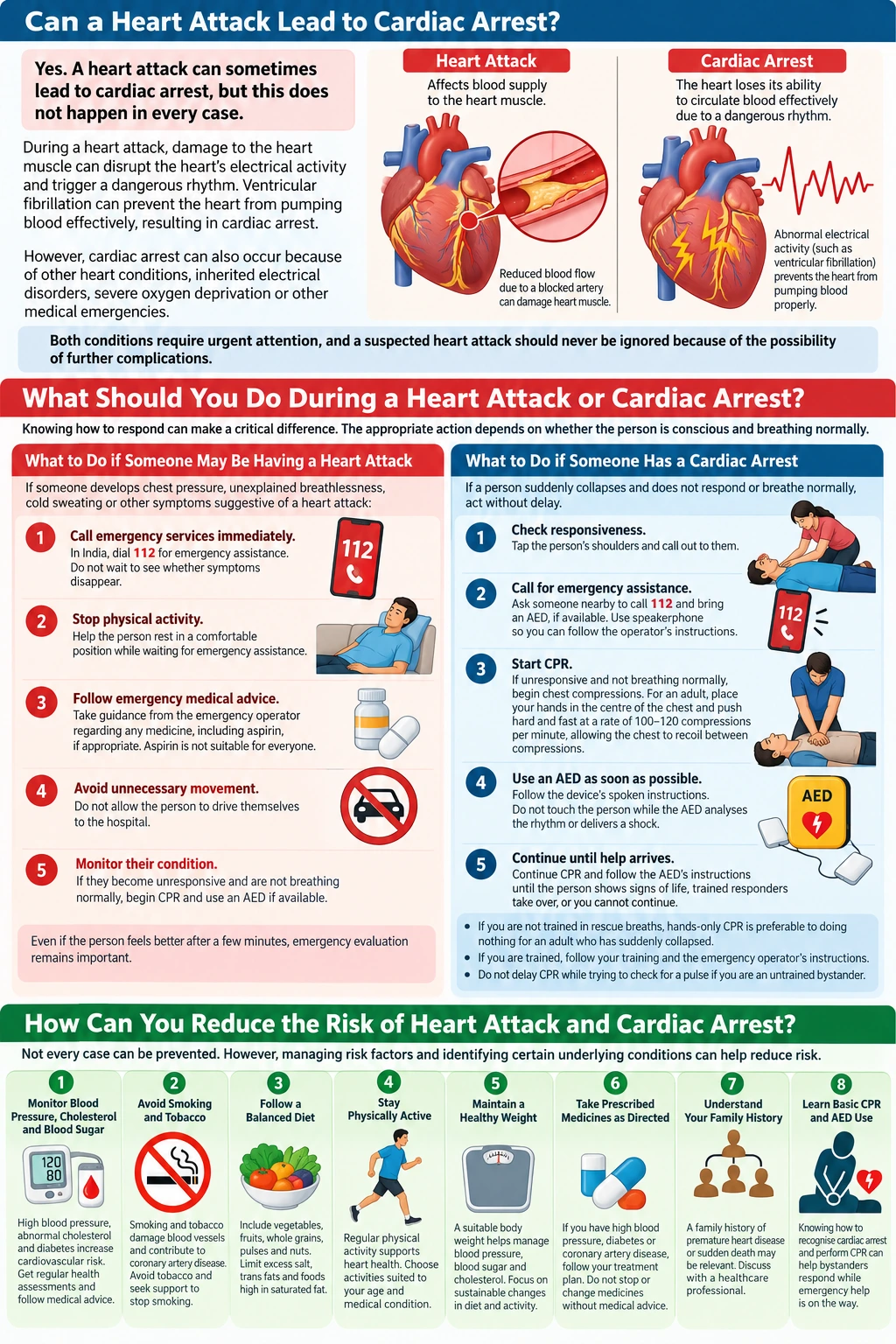
Yes. A heart attack can sometimes lead to cardiac arrest, but this does not happen in every case.
During a heart attack, damage to the heart muscle can disrupt the heart’s electrical activity and trigger a dangerous rhythm. Ventricular fibrillation is one such rhythm that can prevent the heart from pumping blood effectively, resulting in cardiac arrest.
However, cardiac arrest can also occur because of other heart conditions, inherited electrical disorders, severe oxygen deprivation or other medical emergencies.
The important distinction is that a heart attack affects blood supply to the heart muscle, while cardiac arrest causes the heart to lose its ability to circulate blood effectively. Both require urgent attention, and a suspected heart attack should never be ignored because of the possibility of further complications.
What Should You Do During a Heart Attack or Cardiac Arrest?
Knowing how to respond to a suspected heart attack or cardiac arrest can make a critical difference. The appropriate action depends on whether the person is conscious and breathing normally.
What to Do if Someone May Be Having a Heart Attack
If someone develops chest pressure, unexplained breathlessness, cold sweating or other symptoms suggestive of a heart attack:
- Call emergency services immediately. In India, dial 112 for emergency assistance. Do not wait to see whether symptoms disappear.
- Stop physical activity. Help the person rest in a comfortable position while waiting for emergency assistance.
- Follow emergency medical advice. Take guidance from the emergency operator regarding any medicine, including aspirin, if appropriate. Aspirin is not suitable for everyone.
- Avoid unnecessary movement. Do not allow the person to drive themselves to the hospital.
- Monitor their condition. If they become unresponsive and are not breathing normally, begin CPR and use an AED if available.
Even if the person feels better after a few minutes, emergency evaluation remains important.
What to Do if Someone Has a Cardiac Arrest
If a person suddenly collapses and does not respond or breathe normally, act without delay.
- Check responsiveness. Tap the person’s shoulders and call out to them.
- Call for emergency assistance. Ask someone nearby to call 112 and bring an AED, if available. Use speakerphone so you can follow the emergency operator’s instructions.
- Start CPR. If the person is unresponsive and not breathing normally, begin chest compressions immediately. For an adult, place your hands in the centre of the chest and push hard and fast at a rate of 100–120 compressions per minute, allowing the chest to recoil between compressions.
- Use an AED as soon as possible. Follow the device’s spoken instructions. Do not touch the person while the AED analyses the rhythm or delivers a shock.
- Continue until help arrives. Continue CPR and follow the AED’s instructions until the person shows signs of life, trained responders take over, or you cannot continue.
If you are not trained in rescue breaths, hands-only CPR is preferable to doing nothing for an adult who has suddenly collapsed. If you are trained, follow your training and the emergency operator’s instructions.
Do not delay CPR while trying to check for a pulse if you are an untrained bystander.
How Can You Reduce the Risk of Heart Attack and Cardiac Arrest?
Not every case of cardiac arrest can be prevented. However, managing cardiovascular risk factors and identifying certain underlying conditions can help reduce risk.
1. Monitor Blood Pressure, Cholesterol and Blood Sugar
High blood pressure, abnormal cholesterol levels and diabetes can damage blood vessels over time and increase cardiovascular risk. Regular health assessments, when appropriate, can help identify these conditions.
Follow medical advice regarding monitoring, medicines and lifestyle changes.
2. Avoid Smoking and Tobacco
Smoking and tobacco use damage blood vessels and contribute to coronary artery disease. Avoiding tobacco and seeking support to stop smoking can help improve cardiovascular health.
3. Follow a Balanced Diet
Include vegetables, fruits, whole grains, pulses, nuts and other nutrient-rich foods in your diet. Limit excess salt, trans fats and foods high in saturated fat. Individual dietary needs may vary depending on existing medical conditions.
4. Stay Physically Active
Regular physical activity supports cardiovascular health and helps manage several risk factors. Choose activities suited to your age, fitness level and medical condition. Anyone with concerning symptoms or a diagnosed heart condition should seek medical advice about appropriate exercise.
5. Maintain a Healthy Weight
Maintaining a suitable body weight can help manage blood pressure, blood sugar and cholesterol. Sustainable changes in eating habits and activity levels are generally more useful than extreme diets.
6. Take Prescribed Medicines as Directed
If you have high blood pressure, diabetes, coronary artery disease or another diagnosed condition, follow the treatment plan provided by your healthcare professional. Do not stop or change prescribed medicines without medical advice.
7. Understand Your Family History
A family history of premature heart disease, unexplained sudden death or inherited heart rhythm disorders may be relevant to your cardiovascular risk. Discuss such a history with a healthcare professional to determine whether further evaluation is appropriate.
8. Learn Basic CPR and AED Use
Knowing how to recognise cardiac arrest and perform CPR can help bystanders respond while emergency services are on their way. CPR training and familiarity with AEDs are valuable for families, workplaces and community settings.
Frequently Asked Questions
1. What is the main difference between a heart attack and cardiac arrest?
A heart attack occurs when blood flow to part of the heart muscle is blocked or significantly reduced. Cardiac arrest occurs when the heart suddenly stops pumping blood effectively, usually because of a dangerous electrical disturbance. A heart attack may trigger cardiac arrest, but they are different medical emergencies.
2. Which is more dangerous: a heart attack or cardiac arrest?
Both are life-threatening emergencies. Cardiac arrest causes blood circulation to stop effectively and can lead to death within minutes without immediate resuscitation. A heart attack can also cause severe heart damage or trigger cardiac arrest. Neither condition should be considered less serious.
3. Can a person have a heart attack without chest pain?
Yes. Some people experience breathlessness, nausea, sweating, back or jaw discomfort, unusual fatigue or other less typical symptoms. Others may have very subtle symptoms. The absence of chest pain does not rule out a heart attack.
4. Can cardiac arrest happen without warning?
Yes. Cardiac arrest can occur suddenly, sometimes without noticeable warning symptoms. In other cases, a person may experience palpitations, dizziness, chest discomfort or breathlessness beforehand. These symptoms require appropriate medical assessment, particularly when they are sudden, severe or unexplained.
5. Can a person survive cardiac arrest?
Survival is possible, but it depends on several factors, including the cause, the heart rhythm, how quickly CPR begins and how soon defibrillation and advanced medical care are provided. Immediate CPR and timely AED use can improve the chances of survival.
6. Does every heart attack cause cardiac arrest?
No. Many people experience a heart attack without developing cardiac arrest. However, a heart attack can damage the heart muscle and trigger a dangerous rhythm disturbance. This is one reason immediate assessment and treatment are essential.
7. How can you recognise cardiac arrest in an emergency?
The key warning signs are sudden collapse, unresponsiveness and absent or abnormal breathing, including occasional gasping. Call emergency services, start CPR and use an AED if available. Do not delay while waiting for the person to recover.
8. What tests are used to identify a heart attack?
An ECG and blood tests measuring cardiac troponin are commonly used, along with a clinical assessment. Depending on the circumstances, doctors may also recommend echocardiography or coronary angiography. The investigations required depend on the patient’s symptoms and condition.
9. Is cardiac arrest the same as heart failure?
No. Cardiac arrest is the sudden loss of effective heart pumping. Heart failure is a condition in which the heart cannot pump blood adequately to meet the body’s needs, or can do so only with elevated filling pressures. Heart failure may develop over time, although acute heart failure can occur suddenly. In some circumstances, severe heart failure can increase the risk of cardiac arrest.
10. When should someone seek emergency medical help for heart symptoms?
Seek emergency assistance for new or unexplained chest pressure, breathlessness, cold sweating, pain spreading to the arm or jaw, or other symptoms suggestive of a heart attack. Sudden collapse with unresponsiveness and abnormal breathing requires immediate emergency action, CPR and an AED if available. Do not delay seeking help to search for symptoms online.
Conclusion
Understanding the difference between heart attack and cardiac arrest helps people recognise that these are two distinct but potentially life-threatening conditions. A heart attack involves a problem with blood supply to the heart muscle, while cardiac arrest involves the sudden loss of effective heart pumping.
Both require urgent medical attention. Recognising warning signs, seeking emergency assistance promptly, managing cardiovascular risk factors and learning CPR can help people respond more effectively to cardiac emergencies.
If you have concerns about chest discomfort, breathlessness, palpitations or other symptoms, seek appropriate medical assessment. Never delay emergency care when a heart attack or cardiac arrest is suspected.
Medical disclaimer: This article is intended for general educational purposes and does not replace professional medical advice, diagnosis or treatment. Symptoms and treatment requirements vary between individuals. In an emergency, contact emergency services immediately.
Contact Details: