The nervous system controls almost every function of the human body. It allows us to move, speak, think, remember, feel sensations, maintain balance and coordinate the activities of different organs. When the brain, spinal cord or peripheral nerves are affected by disease or injury, a person may develop a wide range of symptoms.
Understanding neurological disorders symptoms can help patients recognise changes that deserve medical attention. Some neurological symptoms may develop gradually, while others can appear suddenly and require urgent evaluation. Symptoms can also vary considerably depending on which part of the nervous system is affected.
Neurological disorders include conditions such as migraine, epilepsy, stroke, Parkinson’s disease, multiple sclerosis, peripheral neuropathy, Alzheimer’s disease and many other disorders. Because several neurological symptoms can overlap with other medical conditions, proper diagnosis by a qualified healthcare professional is important.
What Are Neurological Disorders?
Neurological disorders are conditions that affect the brain, spinal cord, peripheral nerves or the connections between nerves and muscles.
The nervous system can be broadly divided into:
| Part of the nervous system | Main role |
| Brain | Controls thinking, memory, movement, speech, emotions and many body functions |
| Spinal cord | Carries signals between the brain and the rest of the body |
| Peripheral nerves | Carry sensory and movement signals throughout the body |
| Autonomic nervous system | Helps regulate functions such as heart rate, digestion, blood pressure and sweating |
Neurological disorders may result from genetic factors, infections, blood vessel problems, immune-system abnormalities, injuries, tumours, nutritional deficiencies, metabolic conditions or age-related changes.
What Are the Common Neurological Disorders Symptoms?
The symptoms of neurological disorders depend on the affected part of the nervous system and the underlying condition.
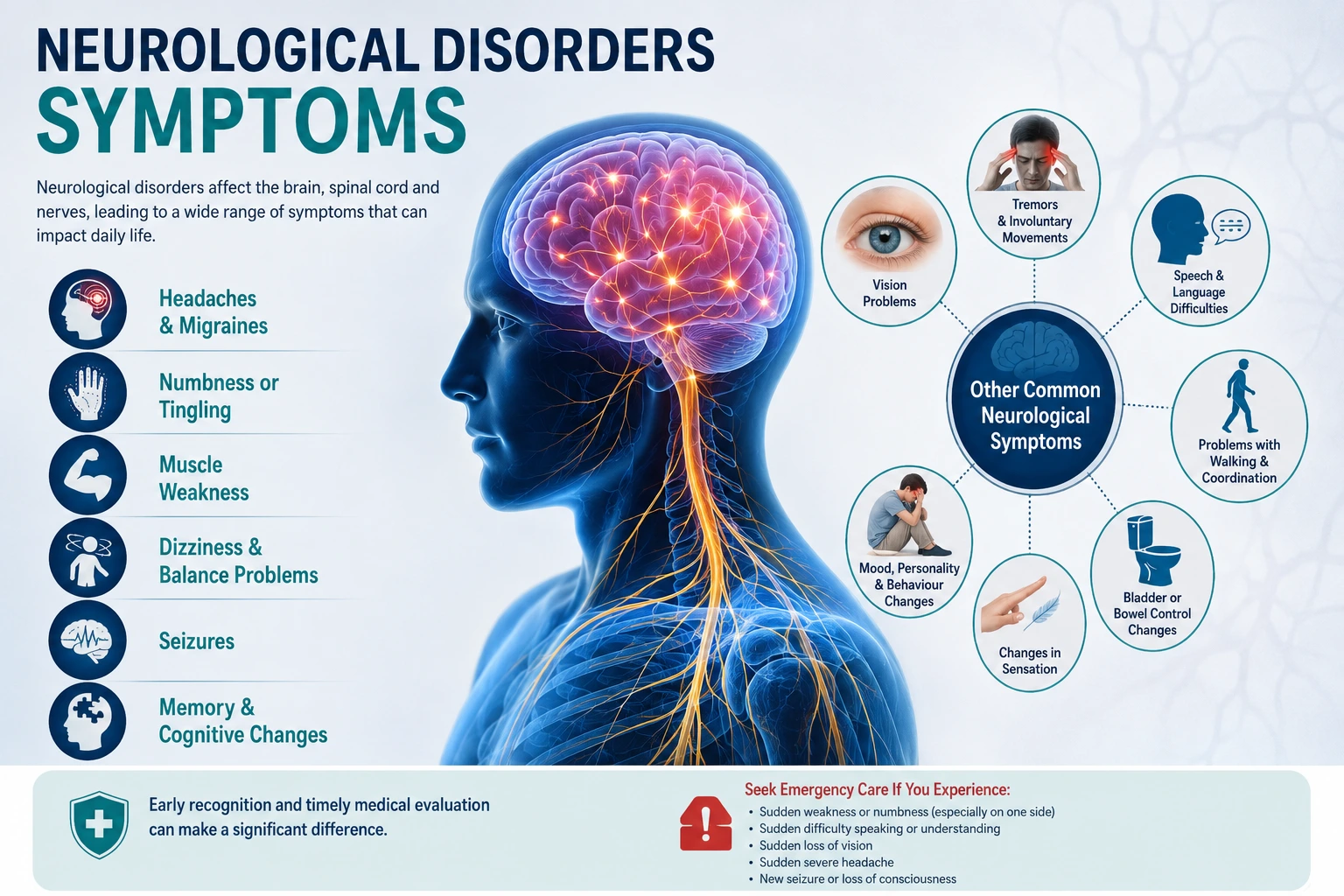
Common neurological disorders symptoms include:
- Persistent or recurrent headaches
- Dizziness or vertigo
- Numbness or tingling
- Muscle weakness
- Tremors or involuntary movements
- Problems with balance and coordination
- Seizures
- Memory problems
- Difficulty concentrating
- Confusion
- Speech or language difficulties
- Changes in vision
- Difficulty walking
- Loss of sensation
- Changes in bladder or bowel control
- Sleep disturbances
- Personality or behavioural changes
Having one of these symptoms does not necessarily mean that a person has a neurological disorder. However, persistent, worsening or unexplained symptoms should be evaluated.
1. Headaches and Migraines
Headache is one of the most common neurological complaints. Headaches can have many causes, ranging from migraine and tension-type headaches to infections, medication-related problems and other medical conditions.
Migraines may involve:
- Moderate to severe headache
- Throbbing or pulsating pain
- Nausea or vomiting
- Sensitivity to light or sound
- Visual disturbances
- Temporary neurological symptoms known as aura
A sudden, extremely severe headache that reaches maximum intensity rapidly should not be ignored, particularly when accompanied by neurological symptoms.
2. Numbness and Tingling
Numbness or a “pins and needles” sensation may occur when sensory nerves are affected.
The sensation may occur in:
- Hands or fingers
- Feet or toes
- Arms or legs
- Face
- One side of the body
Peripheral neuropathy, diabetes, nerve compression, vitamin deficiencies and certain neurological conditions can cause numbness or tingling.
The location and pattern of numbness can provide important clues about its underlying cause.
For example, symptoms affecting one side of the body suddenly may require urgent assessment, particularly when accompanied by facial weakness, speech difficulty or other stroke warning signs.
3. Muscle Weakness
Muscle weakness is another important neurological symptom.
Patients may notice:
- Difficulty climbing stairs
- Trouble getting up from a chair
- Difficulty lifting objects
- Dropping things unexpectedly
- Difficulty raising an arm
- Problems walking
- Frequent falls
Weakness can result from problems affecting the brain, spinal cord, nerves, neuromuscular junction or muscles.
Sudden weakness, especially on one side of the body, is a medical emergency because it can be a warning sign of stroke.
4. Dizziness, Vertigo and Balance Problems
Dizziness can have several causes. Neurological disorders may cause a sensation of spinning, imbalance or difficulty coordinating movements.
Vertigo is commonly described as the feeling that the person or surroundings are moving or spinning.
Neurological causes of dizziness or balance problems may include certain disorders affecting the brain or balance pathways.
Patients may also experience:
- Unsteadiness while walking
- Frequent falls
- Difficulty standing
- Poor coordination
- Nausea
- Abnormal eye movements
Because dizziness can also arise from inner-ear, cardiovascular or metabolic problems, a medical assessment may be necessary to determine the cause.
5. Seizures
A seizure occurs because of abnormal electrical activity in the brain. Seizures can vary significantly from one person to another.
Some seizures involve:
- Loss of consciousness
- Stiffening of muscles
- Repetitive jerking movements
- Temporary confusion
- Unusual sensations
- Sudden behavioural changes
- Brief periods of staring or unresponsiveness
Epilepsy is a neurological disorder characterised by a tendency to have recurrent unprovoked seizures.
A first-time seizure should be medically evaluated to determine the cause and assess the risk of recurrence.
6. Memory Loss and Cognitive Changes
Memory problems can occur for many reasons, including ageing, stress, sleep problems, certain medications and medical conditions. However, persistent or progressive cognitive changes may be associated with neurological disorders.
Possible symptoms include:
- Frequently forgetting recent information
- Difficulty finding familiar words
- Trouble completing familiar tasks
- Difficulty planning or solving problems
- Becoming disoriented
- Repeatedly asking the same questions
- Difficulty managing everyday activities
Conditions such as Alzheimer’s disease and other forms of dementia can cause progressive changes in memory and thinking.
Early assessment can help determine whether symptoms are related to a neurological condition or another potentially treatable cause.
7. Speech and Language Difficulties
Changes in speech can occur when areas of the brain responsible for language or movement are affected.
Symptoms may include:
- Slurred speech
- Difficulty finding words
- Difficulty understanding speech
- Trouble reading or writing
- Difficulty communicating thoughts
- Changes in voice
Sudden difficulty speaking or understanding speech is particularly concerning because it can be a sign of stroke.
8. Tremors and Involuntary Movements
Tremor refers to involuntary, rhythmic shaking of a body part. It may affect the hands, head, arms, legs or other parts of the body.
Tremors can occur for various reasons, including:
- Essential tremor
- Parkinson’s disease
- Certain medications
- Metabolic abnormalities
- Neurological conditions
Other involuntary movements may include muscle jerks, spasms, abnormal repetitive movements or uncontrolled movements.
The timing, frequency and circumstances in which movements occur can help doctors determine the underlying cause.
9. Vision Problems
Some neurological disorders can affect vision or the pathways that carry visual information from the eyes to the brain.
Symptoms may include:
- Double vision
- Loss of part of the visual field
- Blurred vision
- Temporary visual disturbances
- Difficulty coordinating eye movements
- Sudden loss of vision
Sudden vision changes, particularly when combined with weakness, speech difficulties or severe headache, require immediate medical assessment.
10. Problems With Walking and Coordination
Walking requires coordinated communication between the brain, spinal cord, nerves, muscles and balance systems.
Neurological disorders may cause:
- Unsteady walking
- Shuffling steps
- Difficulty initiating movement
- Frequent falls
- Muscle stiffness
- Poor coordination
- Difficulty performing precise movements
Progressive changes in walking pattern should be discussed with a healthcare professional.
11. Changes in Bladder or Bowel Control
The nervous system helps regulate bladder and bowel function. Disorders affecting the brain, spinal cord or nerves may sometimes interfere with normal control.
Symptoms may include:
- Difficulty starting urination
- Loss of bladder control
- Urinary urgency
- Constipation
- Loss of bowel control
These symptoms can also have many non-neurological causes, so evaluation is important rather than assuming that they are caused by a neurological condition.
12. Changes in Sensation
Neurological disorders can alter how a person perceives touch, temperature, pain or vibration.
Some patients may experience:
- Reduced sensation
- Burning sensations
- Electric-shock-like sensations
- Increased sensitivity
- Abnormal pain
- Difficulty distinguishing hot and cold
Peripheral nerve disorders are a common reason for abnormal sensations in the hands and feet.
Neurological Disorders Symptoms by the Area Affected
The pattern of symptoms can sometimes provide clues about the affected part of the nervous system.
| Area affected | Possible symptoms |
| Brain | Headache, seizures, memory problems, speech changes, weakness, vision changes |
| Spinal cord | Weakness, numbness, balance problems, bladder or bowel changes |
| Peripheral nerves | Tingling, numbness, burning pain, weakness |
| Cerebellum | Poor coordination, balance problems, unsteady walking |
| Movement-related brain regions | Tremor, stiffness, slowed movements, involuntary movements |
This table is only a general guide. A complete medical assessment is necessary to identify the actual cause.
What Causes Neurological Disorders?
Neurological disorders can have many different causes.
Common causes and risk factors include:
- Genetic or inherited conditions
- Stroke and other blood vessel disorders
- Infections
- Head or spinal injuries
- Autoimmune diseases
- Brain or spinal tumours
- Metabolic disorders
- Nutritional deficiencies
- Diabetes and associated nerve damage
- Exposure to certain toxins
- Age-related neurological changes
- Degenerative diseases
In some cases, the exact cause may not be immediately identifiable.
When Are Neurological Symptoms an Emergency?
Some neurological symptoms require immediate medical attention because they may indicate stroke, brain bleeding, severe infection or another potentially life-threatening condition.
Seek emergency medical care if neurological symptoms develop suddenly, particularly:
- Facial drooping
- Sudden weakness or numbness, especially on one side
- Sudden difficulty speaking or understanding speech
- Sudden loss of vision
- Sudden severe dizziness with difficulty walking
- A sudden, extremely severe headache
- New seizure or prolonged seizure
- Sudden confusion or loss of consciousness
A useful way to remember common stroke warning signs is FAST:
- F – Face: Is one side of the face drooping?
- A – Arms: Is one arm weak or numb?
- S – Speech: Is speech slurred or difficult to understand?
- T – Time: Seek emergency medical help immediately.
Do not wait for symptoms to disappear if a stroke is suspected.
How Are Neurological Disorders Diagnosed?
Diagnosis begins with a detailed medical history and neurological examination.
Depending on the symptoms, doctors may recommend:
| Investigation | Purpose |
| Neurological examination | Assesses strength, sensation, reflexes, coordination and other functions |
| Blood tests | Looks for metabolic, nutritional, inflammatory or other abnormalities |
| MRI | Provides detailed images of the brain, spinal cord or other structures |
| CT scan | Helps identify bleeding, stroke, injury and other abnormalities |
| EEG | Records electrical activity in the brain and is commonly used in seizure evaluation |
| Nerve conduction studies | Assess how electrical signals travel through peripheral nerves |
| Electromyography (EMG) | Evaluates electrical activity in muscles |
| Lumbar puncture | May help diagnose certain infections, inflammatory conditions or other disorders |
Not every patient requires every test. Investigations are selected according to the patient’s symptoms and clinical findings.
How Can Neurological Health Be Supported?
Not all neurological disorders can be prevented. However, several lifestyle and medical measures can help reduce the risk of certain neurological problems and support overall health.
Important measures include:
- Control blood pressure, blood sugar and cholesterol.
- Avoid smoking and tobacco products.
- Maintain a balanced diet.
- Exercise regularly according to your health condition.
- Maintain a healthy body weight.
- Get adequate sleep.
- Wear appropriate protective equipment during activities with a risk of head injury.
- Limit alcohol consumption.
- Take medicines only as prescribed.
- Attend recommended health check-ups.
- Seek medical attention for persistent or unexplained neurological symptoms.
Frequently Asked Questions About Neurological Disorders Symptoms
What are the most common neurological disorders symptoms?
Common symptoms include headaches, dizziness, numbness, tingling, muscle weakness, seizures, tremors, memory problems, speech difficulties, vision changes, balance problems and changes in coordination.
Can neurological disorders develop suddenly?
Yes. Some neurological conditions can cause sudden symptoms. Stroke, certain seizures and some forms of acute neurological injury can develop suddenly and require urgent medical attention.
Are headaches always a sign of a neurological disorder?
No. Headaches are extremely common and can have many causes. However, a new, severe, unusual or rapidly developing headache—particularly when accompanied by neurological symptoms—should be evaluated promptly.
Can stress cause neurological symptoms?
Stress can contribute to symptoms such as headaches, sleep problems, dizziness or difficulty concentrating. However, persistent, severe or progressive symptoms should not automatically be attributed to stress without appropriate medical evaluation.
When should I see a neurologist?
You should consider consulting a doctor if you have persistent or recurrent neurological symptoms such as unexplained numbness, weakness, seizures, tremors, balance problems, memory changes or recurring headaches. Sudden neurological symptoms should be treated as an emergency.
Conclusion
Recognising neurological disorders symptoms can help patients seek appropriate medical attention at the right time. Neurological symptoms can range from headaches, numbness and dizziness to seizures, muscle weakness, memory changes, movement problems and speech or vision difficulties.
Because many neurological symptoms have multiple possible causes, self-diagnosis is not recommended. A detailed clinical assessment allows a doctor to identify patterns, determine whether the problem involves the brain, spinal cord or peripheral nerves, and recommend appropriate investigations.
At Aayush Hospital, patients experiencing neurological symptoms can seek professional medical evaluation and guidance. If symptoms are persistent, worsening or unexplained, timely consultation can help identify the underlying cause and determine the appropriate next steps.
Contact Details: