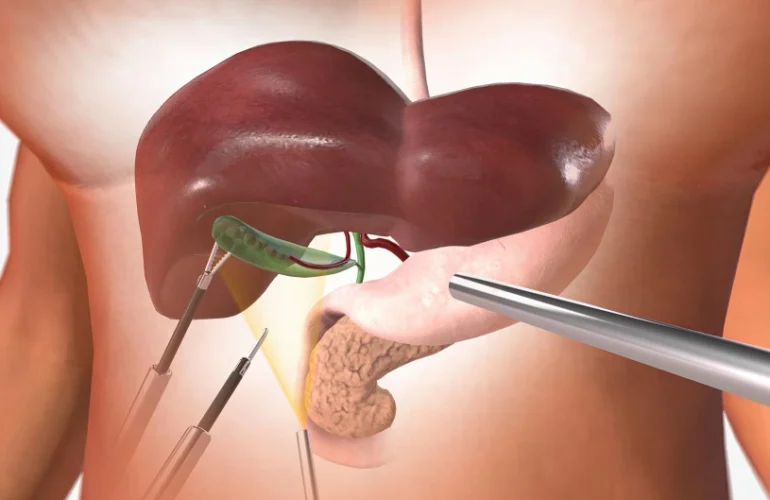
Stomach cancer, also known as gastric cancer, is one of the most serious digestive system cancers worldwide. The challenge with stomach cancer is that it often develops silently, causing few or no symptoms in its early stages. As a result, many patients are diagnosed only after the disease has progressed, making treatment more complex.
One of the most effective tools doctors use to identify stomach abnormalities is an endoscopy. Many patients experiencing persistent digestive symptoms often ask, can endoscopy detect stomach cancer? The answer is yes. Endoscopy is considered one of the most accurate and reliable methods for detecting stomach cancer and other gastrointestinal conditions.
In this article, we will explore how endoscopy works, how it helps diagnose stomach cancer, its accuracy, benefits, risks, and when you should consider getting tested.
Understanding Stomach Cancer
Stomach cancer occurs when abnormal cells in the stomach lining begin to grow uncontrollably. Over time, these cancerous cells can invade nearby tissues and spread to other parts of the body.
Common Types of Stomach Cancer
| Type | Description |
| Adenocarcinoma | Most common type, accounting for over 90% of cases |
| Gastrointestinal Stromal Tumor (GIST) | Rare cancer arising from connective tissues |
| Lymphoma | Cancer affecting immune cells within the stomach |
| Neuroendocrine Tumors | Develop from hormone-producing cells |
Early detection plays a crucial role in improving treatment outcomes and survival rates.
What Is an Endoscopy?
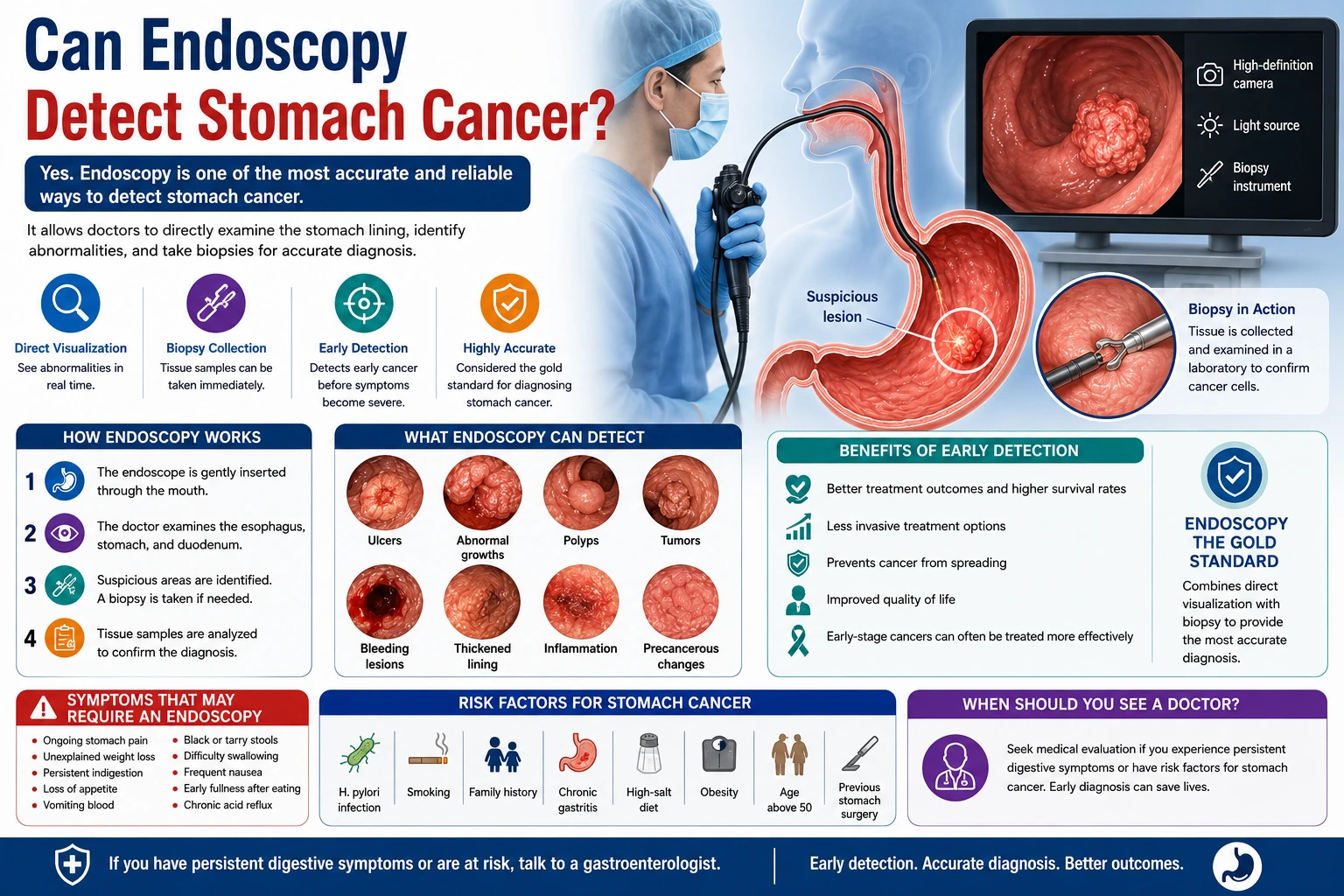
An endoscopy is a minimally invasive procedure that allows doctors to examine the inside of the digestive tract using a thin, flexible tube called an endoscope.
The endoscope contains:
- A high-definition camera
- A light source
- Specialized instruments for tissue sampling
For stomach evaluation, doctors perform an Upper Gastrointestinal Endoscopy (Upper GI Endoscopy) or Esophagogastroduodenoscopy (EGD).
The scope is gently inserted through the mouth and passed down the throat to examine:
- Esophagus
- Stomach
- Duodenum (first part of the small intestine)
This direct visualization helps doctors identify abnormalities that may indicate cancer.
Can Endoscopy Detect Stomach Cancer?
Yes, endoscopy can detect stomach cancer and is considered the gold standard for diagnosing many stomach-related conditions.
During the procedure, doctors can directly inspect the stomach lining for suspicious changes, including:
- Ulcers
- Abnormal growths
- Polyps
- Bleeding lesions
- Thickened stomach lining
- Tumors
- Precancerous changes
Unlike imaging tests that provide indirect views, endoscopy allows specialists to see the stomach tissue in real time.
If any suspicious area is identified, a biopsy can be performed immediately.
Why Endoscopy Is So Effective for Detecting Stomach Cancer
The effectiveness of endoscopy lies in its ability to combine visualization with tissue diagnosis.
Key Advantages
Direct Visualization
Doctors can observe even small abnormalities that may not appear on imaging scans.
Biopsy Collection
Tissue samples can be taken during the same procedure for laboratory analysis.
Detection of Early Cancer
Endoscopy can identify very early-stage cancers before symptoms become severe.
Monitoring High-Risk Patients
Patients with chronic gastritis, ulcers, or a family history of stomach cancer can be monitored effectively.
These advantages make endoscopy one of the most powerful tools in gastrointestinal cancer detection.
How Does Endoscopy Detect Stomach Cancer?
The process involves several important steps.
Step 1: Examination of the Stomach Lining
The gastroenterologist carefully inspects the stomach’s inner surface for abnormalities such as:
- Red patches
- Irregular growths
- Ulcerated lesions
- Thickened folds
- Areas of inflammation
Step 2: Advanced Imaging Techniques
Modern endoscopes may use advanced technologies including:
- Narrow-band imaging (NBI)
- Chromoendoscopy
- Magnification endoscopy
- High-definition imaging
These techniques help identify subtle cancerous changes that may not be visible under standard examination.
Step 3: Tissue Biopsy
If suspicious tissue is found, tiny instruments passed through the endoscope collect samples.
The biopsy is then examined by a pathologist to determine whether cancer cells are present.
A biopsy remains the definitive method for confirming stomach cancer.
Symptoms That May Require an Endoscopy
Doctors may recommend an endoscopy if you experience persistent digestive symptoms.
Common Warning Signs
- Ongoing stomach pain
- Unexplained weight loss
- Persistent indigestion
- Difficulty swallowing
- Loss of appetite
- Frequent nausea
- Vomiting blood
- Black or tarry stools
- Early fullness after eating
- Chronic acid reflux
These symptoms do not necessarily mean cancer is present, but they should never be ignored.
Risk Factors for Stomach Cancer
Certain individuals have a higher risk of developing stomach cancer.
Major Risk Factors
| Risk Factor | Impact |
| Helicobacter pylori infection | Significant increase in risk |
| Smoking | Damages stomach lining |
| Family history of stomach cancer | Increases genetic susceptibility |
| Chronic gastritis | Long-term inflammation raises risk |
| High-salt diet | Associated with gastric cancer development |
| Obesity | Linked to various cancers |
| Previous stomach surgery | May increase long-term risk |
| Age above 50 | Risk rises with age |
Patients with multiple risk factors may benefit from earlier screening and evaluation.
Can Endoscopy Detect Early Stomach Cancer?
One of the most important benefits of endoscopy is its ability to detect cancer at an early stage.
Why Early Detection Matters
When stomach cancer is found early:
- Treatment options are more effective
- Surgery may be less extensive
- Survival rates improve significantly
- Cancer may be removed before spreading
In some cases, very early cancers can be treated using advanced endoscopic procedures without major surgery.
This is one reason why doctors strongly recommend timely evaluation of persistent digestive symptoms.
What Happens During an Endoscopy?
Many patients worry about discomfort during the procedure.
Fortunately, modern endoscopy is generally safe and well-tolerated.
Before the Procedure
Patients are usually asked to:
- Fast for 6–8 hours
- Avoid certain medications if advised
- Arrange transportation if sedation is used
During the Procedure
The doctor:
- Administers sedation or throat anesthesia.
- Inserts the endoscope through the mouth.
- Examines the upper digestive tract.
- Takes biopsies if needed.
After the Procedure
Patients are monitored briefly and can usually return home the same day.
The entire procedure typically takes 15–30 minutes.
How Accurate Is Endoscopy for Detecting Stomach Cancer?
Endoscopy is among the most accurate diagnostic tools available.
Accuracy Factors
The accuracy depends on:
- Quality of equipment
- Experience of the specialist
- Size and location of the lesion
- Use of advanced imaging techniques
- Adequate biopsy sampling
When combined with biopsy, endoscopy provides highly reliable results and remains the standard method for diagnosing stomach cancer.
Can Stomach Cancer Be Missed on Endoscopy?
Although highly effective, no test is perfect.
Rarely, stomach cancer may be missed if:
- The lesion is extremely small
- The cancer is hidden beneath the surface lining
- Visualization is limited
- Insufficient biopsy samples are obtained
For this reason, doctors may recommend repeat endoscopy if symptoms persist despite normal findings.
Endoscopy vs Other Tests for Stomach Cancer
Several tests may be used during evaluation, but endoscopy remains the most definitive.
| Test | Purpose | Can Confirm Cancer? |
| Endoscopy | Direct visualization and biopsy | Yes |
| CT Scan | Assess spread of cancer | No |
| MRI | Evaluate surrounding structures | No |
| PET Scan | Detect metastatic disease | No |
| Blood Tests | General health assessment | No |
| Biopsy | Tissue diagnosis | Yes |
While imaging tests provide valuable information, a biopsy obtained during endoscopy is usually necessary for confirmation.
Benefits of Early Endoscopic Detection
Major Advantages
- Earlier diagnosis
- Better treatment outcomes
- Less invasive treatment options
- Reduced cancer spread
- Improved quality of life
- Increased survival rates
Patients diagnosed in the early stages often experience significantly better long-term outcomes than those diagnosed later.
Are There Any Risks Associated with Endoscopy?
Endoscopy is generally very safe when performed by experienced specialists.
Possible Risks
- Mild sore throat
- Temporary bloating
- Sedation-related reactions
- Bleeding after biopsy
- Rare perforation of the digestive tract
Serious complications are uncommon, and the benefits usually far outweigh the risks when cancer detection is a concern.
When Should You See a Doctor?
You should seek medical evaluation if you experience:
- Persistent indigestion lasting several weeks
- Unexplained weight loss
- Ongoing stomach discomfort
- Difficulty swallowing
- Vomiting blood
- Black stools
- Family history of stomach cancer
Prompt assessment can lead to earlier diagnosis and more effective treatment.
Why Choose Aayush Hospital for Gastrointestinal Evaluation?
At Aayush Hospital, patients receive comprehensive digestive health care supported by advanced diagnostic technology and experienced specialists.
Our approach includes:
- Advanced endoscopy services
- Accurate biopsy evaluation
- Early cancer detection programs
- Personalized treatment planning
- Multidisciplinary cancer care
We are committed to providing timely diagnosis and evidence-based treatment to help patients achieve the best possible outcomes.
Conclusion
So, can endoscopy detect stomach cancer? Absolutely. Endoscopy is one of the most effective and reliable methods for identifying stomach cancer, especially in its early stages. By allowing direct visualization of the stomach lining and enabling immediate biopsy collection, endoscopy plays a critical role in accurate diagnosis and treatment planning.
If you are experiencing persistent digestive symptoms or have risk factors for stomach cancer, do not delay seeking medical advice. Early detection can make a significant difference in treatment success and long-term health outcomes.
FAQs
Can endoscopy detect stomach cancer in its early stages?
Yes. Endoscopy can identify very early cancerous and precancerous changes, often before significant symptoms develop.
Is a biopsy always necessary during endoscopy?
If suspicious tissue is found, a biopsy is usually recommended because it is the only way to definitively confirm cancer.
How long does an endoscopy take?
Most upper GI endoscopy procedures take approximately 15–30 minutes.
Is endoscopy painful?
Patients are generally given sedation, making the procedure comfortable and minimally invasive.
Can a normal endoscopy completely rule out stomach cancer?
A normal endoscopy significantly reduces the likelihood of stomach cancer, but additional testing may be recommended if symptoms persist or risk factors are present.
Contact Details: