Uterine fibroids are common, non-cancerous growths that develop in or around the uterus. They can vary in size, ranging from tiny growths that are difficult to detect without imaging to large masses that may cause abdominal enlargement, heavy menstrual bleeding or pressure on nearby organs. Many fibroids do not cause symptoms and may not require immediate treatment.
One of the most common questions following a fibroid diagnosis is: Which size of fibroid is dangerous? The answer depends on more than its measurement. The fibroid’s location, number, growth pattern, symptoms and effect on reproductive health all influence whether treatment is necessary.
A small fibroid inside the uterine cavity may cause significant menstrual bleeding or affect fertility, while a larger fibroid in another location may cause few symptoms. Understanding these differences can help patients make informed decisions about monitoring and treatment with their gynaecologist.
Which Size of Fibroid Is Dangerous?
There is no universally accepted size at which every uterine fibroid becomes dangerous. Fibroids measuring 5 cm or more may be more likely to cause pressure symptoms, depending on their location, but size alone does not determine the need for treatment.
A fibroid’s clinical significance is assessed by considering:
- Size: Larger fibroids may increase the likelihood of abdominal pressure, discomfort or compression of nearby organs.
- Location: Fibroids that project into the uterine cavity may affect menstrual bleeding and fertility, even when small.
- Symptoms: Heavy periods, persistent pelvic pain, urinary difficulties and anaemia may indicate a need for further evaluation.
- Growth pattern: Changes in size over time should be assessed in the context of symptoms, age and imaging findings.
- Pregnancy plans: Some fibroids may affect conception or pregnancy, depending on their size and position.
- Overall health: Anaemia, other medical conditions and the patient’s stage of life can influence treatment decisions.
A large fibroid is not automatically an emergency, and a small fibroid should not automatically be considered harmless. A gynaecologist can assess the findings and recommend appropriate monitoring or treatment.
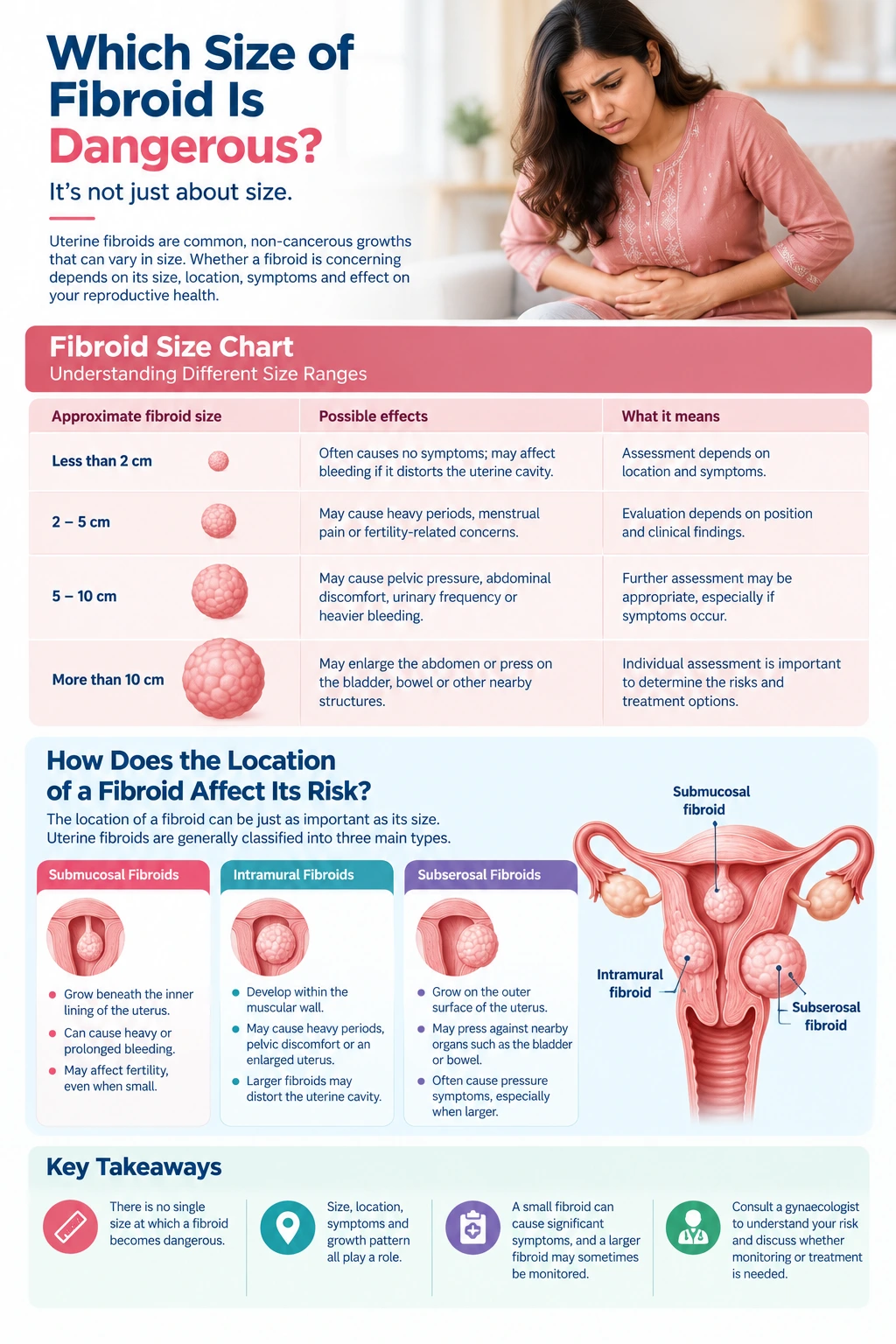
Fibroid Size Chart: Understanding Different Size Ranges
The following table provides a general explanation of how fibroid size may relate to symptoms. These ranges are descriptive, not official danger categories or treatment thresholds.
| Approximate fibroid size | Possible effects | What it means |
| Less than 2 cm | Often causes no symptoms; may affect bleeding if it distorts the uterine cavity | Assessment depends on location and symptoms |
| 2–5 cm | May cause heavy periods, menstrual pain or fertility-related concerns | Evaluation depends on position and clinical findings |
| 5–10 cm | May cause pelvic pressure, abdominal discomfort, urinary frequency or heavier bleeding | Further assessment may be appropriate, especially if symptoms occur |
| More than 10 cm | May enlarge the abdomen or press on the bladder, bowel or other nearby structures | Individual assessment is important to determine the risks and treatment options |
These ranges overlap considerably. A fibroid measuring 3 cm may require treatment if it causes substantial bleeding or distorts the uterine cavity, whereas a larger fibroid may sometimes be monitored if it causes no significant symptoms.
The measurement should always be interpreted alongside the ultrasound or other imaging findings.
How Does the Location of a Fibroid Affect Its Risk?
The location of a fibroid can be just as important as its size. Uterine fibroids are generally classified into three main types based on where they develop.
1. Submucosal Fibroids
Submucosal fibroids grow beneath the inner lining of the uterus and may project into the uterine cavity.
They can cause:
- Heavy or prolonged menstrual bleeding
- Iron-deficiency anaemia due to blood loss
- Changes in the shape of the uterine cavity
- Possible difficulties with conception or an increased risk of certain pregnancy complications
Even a relatively small submucosal fibroid can cause significant symptoms. Its effect on the uterine cavity is an important consideration when deciding whether treatment is appropriate.
2. Intramural Fibroids
Intramural fibroids develop within the muscular wall of the uterus. They are among the common types of uterine fibroids.
Depending on their size and position, they may cause heavy periods, pelvic discomfort or an enlarged uterus. Larger intramural fibroids may also distort the uterine cavity and become relevant when assessing fertility.
3. Subserosal Fibroids
Subserosal fibroids grow on the outer surface of the uterus. They may expand outward and press against nearby organs as they increase in size.
Possible symptoms include:
- A feeling of heaviness or pressure in the lower abdomen
- Frequent urination if the bladder is compressed
- Constipation if the bowel is affected
- Abdominal enlargement or persistent discomfort
A subserosal fibroid may cause pressure symptoms without significantly affecting menstrual bleeding.
Symptoms That May Indicate a Fibroid Needs Medical Attention
Some fibroids are discovered during routine examinations or imaging performed for another reason. Others cause symptoms that affect daily activities and overall health.
Consult a healthcare professional if you experience:
- Heavy menstrual bleeding: Periods that are unusually heavy, prolonged or difficult to manage.
- Bleeding between periods: Unexpected vaginal bleeding that requires evaluation.
- Persistent pelvic pain: Ongoing discomfort, pressure or pain in the lower abdomen.
- Frequent urination: A need to urinate more often than usual, particularly when accompanied by pelvic pressure.
- Difficulty emptying the bladder: Trouble passing urine completely or difficulty starting urination.
- Constipation: Persistent difficulty passing stools that may be associated with pressure in the pelvis.
- Unusual tiredness or weakness: These symptoms may occur when prolonged bleeding leads to anaemia.
- Fertility concerns: Difficulty conceiving or a history of reproductive problems that may warrant assessment of the uterus.
These symptoms do not always indicate that a fibroid is responsible. Other gynaecological and medical conditions can cause similar problems, so an appropriate evaluation is important.
When Is a Fibroid a Medical Emergency?
Seek urgent medical care if you experience:
- Very heavy vaginal bleeding, particularly with dizziness, fainting, marked weakness or breathlessness
- Sudden, severe pelvic or abdominal pain
- Severe pain accompanied by fever or vomiting
- Fainting or symptoms suggesting significant blood loss
Do not wait for a fibroid to reach a particular size before seeking help when serious symptoms occur.
Can a Large Fibroid Affect Pregnancy or Fertility?
Fibroids do not necessarily prevent pregnancy. Many people with uterine fibroids conceive and have healthy pregnancies. However, the effects depend on the fibroid’s location, size, number and relationship to the uterine cavity.
Fibroids that distort the uterine cavity, particularly submucosal fibroids, may interfere with implantation or increase the risk of certain reproductive complications. Larger fibroids may also be associated with pregnancy-related problems in some circumstances.
Depending on their location and characteristics, fibroids may be associated with:
- Difficulty conceiving
- An increased risk of miscarriage in certain cases
- Pain during pregnancy
- An increased likelihood of certain pregnancy complications
- Changes in delivery planning
A fibroid diagnosis does not automatically mean that surgery is required before pregnancy. A gynaecologist can assess the findings, reproductive goals and other potential causes of fertility difficulties before recommending a treatment plan.
How Are Uterine Fibroids Diagnosed?
Diagnosis usually begins with a review of symptoms, menstrual history, medical history and physical examination.
Investigations may include:
Pelvic ultrasound: This is commonly used to identify fibroids and assess their size, number and location.
Blood tests: A complete blood count and other appropriate tests may be recommended when heavy menstrual bleeding raises concerns about anaemia.
MRI: Magnetic resonance imaging may be useful when more detailed information about fibroid location, number or relationship to nearby structures is needed, particularly when planning treatment.
Hysteroscopy: In selected cases, a thin instrument with a camera is used to examine the inside of the uterus and assess fibroids that project into its cavity.
Not every patient requires all these investigations. The choice depends on the clinical assessment and the information needed to guide management.
What Are the Treatment Options for Fibroids?
Treatment depends on symptoms, fibroid size and location, age, reproductive plans and individual preferences. Some fibroids require only observation, while others may benefit from medication or a procedure.
1. Monitoring and Follow-Up
Fibroids that cause no significant symptoms may be monitored rather than treated immediately. Follow-up recommendations depend on the patient’s clinical situation, symptoms and previous imaging findings.
2. Medication
Medicines may help manage heavy menstrual bleeding, pain or other symptoms. Certain hormonal treatments can reduce bleeding, and some medications may temporarily shrink fibroids in selected circumstances.
Medication does not suit every patient and may not eliminate the fibroid. The appropriate choice depends on the symptoms, medical history and treatment goals.
3. Myomectomy
Myomectomy is a procedure to remove fibroids while preserving the uterus. It may be considered when symptoms are significant or when the fibroid’s location affects reproductive goals.
The surgical approach depends on the size, number and location of the fibroids. Removing fibroids does not guarantee that new fibroids will never develop.
4. Uterine Artery Embolisation
Uterine artery embolisation reduces the blood supply to fibroids, causing them to shrink over time. It may be an option for selected patients, depending on their symptoms and reproductive plans.
Its suitability and potential effects on future pregnancy should be discussed with the treating specialist.
5. Hysterectomy
Hysterectomy involves surgical removal of the uterus. It is a definitive treatment for uterine fibroids, but it permanently ends the ability to carry a pregnancy.
It may be considered in selected circumstances when other options are unsuitable or have not provided sufficient relief. The decision requires a discussion of benefits, risks and alternatives.
The size of a fibroid alone does not determine which treatment is appropriate. The decision should be based on the complete clinical picture and the patient’s preferences.
Can Fibroids Be Prevented?
There is currently no guaranteed way to prevent uterine fibroids. Their development is influenced by several factors, including hormonal and genetic influences, and research into their causes continues.
General measures that support overall health include maintaining regular physical activity, eating a balanced diet and seeking medical advice for abnormal menstrual bleeding. These measures should not be considered a proven way to prevent or eliminate fibroids.
Frequently Asked Questions
1. Is a 3 cm fibroid dangerous?
A 3 cm fibroid is not automatically dangerous. Its significance depends on its location and whether it causes heavy bleeding, pain, fertility-related concerns or other symptoms. Some fibroids of this size need only monitoring, while others may require treatment.
2. Is a 5 cm fibroid considered large?
A 5 cm fibroid is larger than many small fibroids and may cause symptoms depending on its position. However, there is no universal size threshold that determines whether a fibroid is dangerous or requires surgery.
3. Is a 10 cm fibroid dangerous?
A 10 cm fibroid is relatively large and may cause abdominal enlargement, pelvic pressure or compression of nearby organs. It warrants an individual assessment, but its size alone does not establish whether emergency treatment or surgery is necessary.
4. Can a small fibroid cause heavy bleeding?
Yes. A small submucosal fibroid that projects into the uterine cavity can cause heavy or prolonged menstrual bleeding. The location and effect on the uterine lining can be more important than the measurement alone.
5. Does every fibroid need surgery?
No. Fibroids that do not cause significant symptoms may be monitored. Treatment may be considered when bleeding, pain, anaemia, pressure symptoms or reproductive concerns affect the patient’s health or quality of life.
6. Can fibroids shrink naturally?
Fibroids may change in size over time. They often shrink after menopause as hormone levels change, although this is not guaranteed. Any treatment or monitoring plan should be based on individual symptoms and medical findings.
7. Does a large fibroid always affect fertility?
No. Many people with large fibroids can conceive. The effect on fertility depends on factors such as location, distortion of the uterine cavity, number of fibroids and other reproductive health considerations.
Conclusion
There is no single measurement that determines which size of fibroid is dangerous. Although larger fibroids may cause pressure symptoms or affect nearby organs, smaller fibroids can also require attention when they cause significant bleeding or distort the uterine cavity.
The most important considerations are the fibroid’s size and location, the symptoms it causes, its effect on reproductive health and the findings of clinical investigations. Persistent heavy bleeding, pelvic pain, urinary difficulties and fertility concerns should be assessed by a qualified healthcare professional.
Medical disclaimer: This article is intended for general educational purposes and does not replace professional medical advice, diagnosis or treatment. Fibroid symptoms and treatment needs vary between individuals. Seek urgent medical attention for severe bleeding, sudden intense pelvic pain or symptoms suggesting significant blood loss.
Contact Details: