
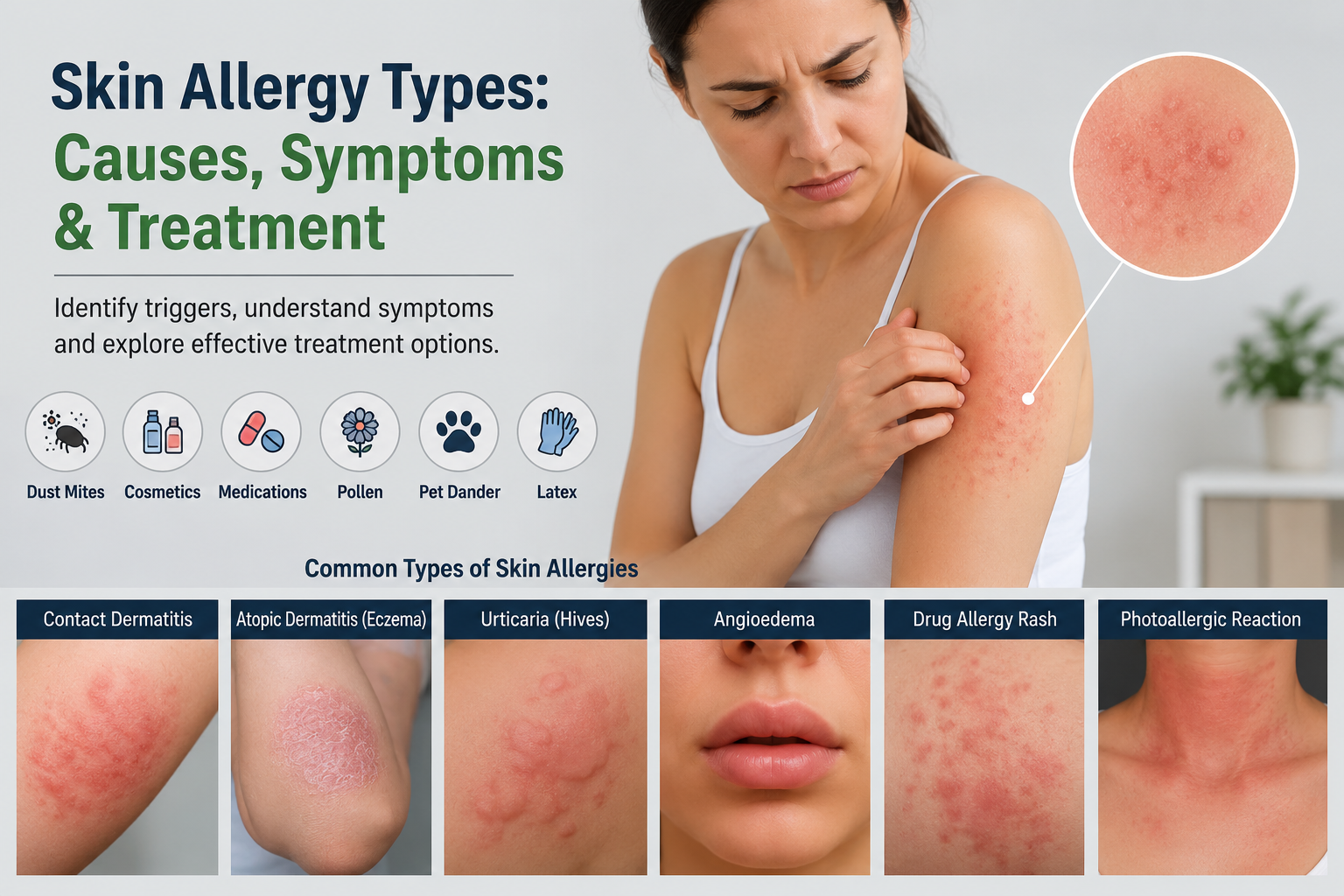
Skin allergies are among the most common skin conditions affecting people of all ages. They can develop suddenly or gradually due to exposure to allergens, environmental triggers, medications, or underlying health conditions. While some skin allergies cause mild itching and redness, others can significantly impact your daily life and require medical attention.
Understanding the different skin allergy types is essential for identifying symptoms early, avoiding triggers, and seeking appropriate treatment. In this comprehensive guide, we’ll discuss the various types of skin allergies, their causes, symptoms, diagnosis, treatment options, and preventive measures.
What Is a Skin Allergy?
A skin allergy occurs when your immune system reacts abnormally to a substance that is usually harmless. These substances, known as allergens, trigger an inflammatory response that leads to itching, redness, swelling, rashes, or blisters.
Common allergens include:
- Certain foods
- Medications
- Cosmetics
- Metals such as nickel
- Latex
- Dust mites
- Pet dander
- Pollen
- Soaps and detergents
- Plants like poison ivy
The severity of skin allergies varies from person to person depending on their immune response and level of exposure.
Common Skin Allergy Types
There are several skin allergy types, each with distinct causes, symptoms, and treatment approaches.
| Skin Allergy Type | Main Symptoms | Common Causes |
| Contact Dermatitis | Redness, itching, blisters | Cosmetics, metals, soaps |
| Atopic Dermatitis (Eczema) | Dry, itchy skin | Genetics, allergens |
| Urticaria (Hives) | Raised itchy welts | Food, medicines, infections |
| Angioedema | Deep swelling | Allergies, medications |
| Drug Allergy Rash | Red rash, itching | Antibiotics, painkillers |
| Photoallergic Reaction | Rash after sun exposure | Medicines, skincare products |
1. Contact Dermatitis
Contact dermatitis develops when the skin comes into direct contact with an irritant or allergen.
Types
Allergic Contact Dermatitis
Occurs when the immune system reacts to substances like:
- Nickel jewelry
- Hair dyes
- Fragrances
- Cosmetics
- Latex gloves
- Adhesives
Irritant Contact Dermatitis
Results from repeated exposure to:
- Detergents
- Cleaning chemicals
- Sanitizers
- Soaps
- Industrial chemicals
Symptoms
- Red rash
- Burning sensation
- Itching
- Swelling
- Dry skin
- Blisters
- Cracked skin
Treatment
- Avoid the triggering substance
- Topical corticosteroid creams
- Moisturizers
- Oral antihistamines
- Cold compresses
2. Atopic Dermatitis (Eczema)
Atopic dermatitis is one of the most common chronic skin allergy types, particularly in children, although adults can also develop it.
It often occurs in people with:
- Asthma
- Hay fever
- Family history of allergies
Symptoms
- Extremely dry skin
- Severe itching
- Thickened skin
- Red or brown patches
- Crusting
- Skin infections from scratching
Common Triggers
- Dust mites
- Wool clothing
- Sweat
- Heat
- Stress
- Dry weather
- Certain foods
Treatment
- Regular moisturizers
- Prescription creams
- Anti-inflammatory medications
- Antihistamines
- Avoiding triggers
3. Urticaria (Hives)
Hives are itchy, raised welts that appear suddenly and may disappear within hours.
They can be:
- Acute (lasting less than six weeks)
- Chronic (lasting more than six weeks)
Causes
- Food allergies
- Insect bites
- Viral infections
- Medicines
- Temperature changes
- Stress
Symptoms
- Raised pink or red welts
- Intense itching
- Burning sensation
- Swelling
Treatment
- Antihistamines
- Corticosteroids (for severe cases)
- Identifying triggers
4. Angioedema
Angioedema is similar to hives but affects deeper layers of the skin.
Common Areas
- Lips
- Eyelids
- Tongue
- Hands
- Feet
- Throat
Symptoms
- Sudden swelling
- Pain
- Tightness
- Difficulty swallowing
- Breathing difficulty (medical emergency)
Causes
- Food allergies
- Medication allergies
- Insect stings
- Genetic conditions
Emergency treatment is necessary if swelling affects breathing.
5. Drug-Induced Skin Allergy
Some medications trigger allergic skin reactions.
Common Medicines
- Penicillin
- Sulfa drugs
- NSAIDs
- Anti-seizure medications
Symptoms
- Rash
- Itching
- Red spots
- Hives
- Fever
- Swelling
Treatment
- Stop the medication (only under medical guidance)
- Antihistamines
- Steroids
- Alternative medication if required
6. Photoallergic Skin Reaction
Some individuals develop allergic reactions when sunlight interacts with certain medications or skincare products.
Common Triggers
- Antibiotics
- Sunscreens
- Perfumes
- Anti-inflammatory drugs
Symptoms
- Red rash
- Itching
- Blisters
- Burning sensation
Prevention
- Wear sunscreen
- Protective clothing
- Avoid peak sunlight
7. Latex Allergy
Latex allergies are common among healthcare workers and individuals frequently exposed to rubber products.
Symptoms
- Skin redness
- Itching
- Hives
- Swelling
Severe reactions may cause breathing problems requiring immediate medical care.
8. Insect Bite Allergy
Some people experience allergic skin reactions after bites from:
- Mosquitoes
- Bees
- Wasps
- Ants
- Fleas
Symptoms
- Swelling
- Redness
- Itching
- Pain
- Large local reactions
Symptoms of Skin Allergies
Although symptoms vary across different skin allergy types, common signs include:
- Persistent itching
- Red patches
- Dry skin
- Blisters
- Raised bumps
- Burning sensation
- Skin peeling
- Swelling
- Cracked skin
- Oozing lesions
Some individuals may also experience:
- Sneezing
- Watery eyes
- Runny nose
- Breathing difficulties (in severe allergic reactions)
Causes of Skin Allergies
Skin allergies occur due to immune system hypersensitivity.
Common triggers include:
Environmental Allergens
- Pollen
- Dust mites
- Mold
- Animal dander
Food Allergens
- Milk
- Eggs
- Peanuts
- Seafood
- Soy
- Wheat
Chemical Products
- Detergents
- Soaps
- Perfumes
- Cosmetics
- Hair dyes
Medications
- Antibiotics
- Painkillers
- Anti-inflammatory medicines
Metals
- Nickel
- Chromium
- Cobalt
Risk Factors
You may have a higher risk of developing skin allergies if you have:
- Family history of allergies
- Asthma
- Hay fever
- Sensitive skin
- Autoimmune disorders
- Frequent exposure to chemicals
- Occupational exposure
How Skin Allergies Are Diagnosed
A dermatologist or allergy specialist may recommend:
| Diagnostic Test | Purpose |
| Physical examination | Evaluate skin lesions |
| Medical history | Identify possible triggers |
| Patch test | Detect contact allergies |
| Skin prick test | Identify environmental allergies |
| Blood tests | Measure allergy-related antibodies |
| Elimination testing | Identify food allergies |
Accurate diagnosis helps determine the exact allergy type and appropriate treatment.
Treatment for Different Skin Allergy Types
Treatment depends on the severity and underlying cause.
Medications
Doctors may prescribe:
- Oral antihistamines
- Corticosteroid creams
- Oral steroids
- Immunomodulator creams
- Antibiotics (if infection develops)
Moisturizers
Regular moisturizing helps:
- Restore the skin barrier
- Reduce dryness
- Minimize itching
Allergen Avoidance
Identifying and avoiding triggers remains one of the most effective long-term management strategies.
Home Care Tips
Patients with skin allergies can reduce flare-ups by following these measures:
- Use fragrance-free skincare products
- Avoid scratching affected skin
- Keep nails trimmed
- Wear loose cotton clothing
- Bathe with lukewarm water
- Apply moisturizer immediately after bathing
- Stay hydrated
- Manage stress
- Use hypoallergenic detergents
When Should You Visit a Doctor?
Seek medical attention if you experience:
- Persistent rash lasting more than one week
- Severe itching affecting sleep
- Skin infection
- Fever with rash
- Facial swelling
- Difficulty breathing
- Recurrent skin allergies
- Extensive blistering
Early treatment prevents complications and improves recovery.
Can Skin Allergies Be Prevented?
While not every allergy can be prevented, these preventive measures can significantly reduce flare-ups.
Prevention Tips
- Identify allergy triggers
- Avoid harsh soaps
- Moisturize daily
- Wear gloves while handling chemicals
- Choose hypoallergenic cosmetics
- Read medication labels carefully
- Protect skin from excessive sunlight
- Follow prescribed treatment plans
Possible Complications
Untreated skin allergies may lead to:
- Chronic eczema
- Skin infections
- Permanent skin thickening
- Sleep disturbances
- Anxiety
- Reduced quality of life
- Secondary bacterial infections
Prompt treatment helps prevent these complications.
Living Well with Skin Allergies
Many skin allergies can be effectively managed with proper diagnosis, medication, skincare, and lifestyle modifications. Keeping a symptom diary, avoiding known triggers, and following your doctor’s recommendations can greatly reduce flare-ups and improve comfort. Regular follow-up is especially important for individuals with chronic conditions such as eczema or recurrent hives.
Frequently Asked Questions (FAQs)
What are the most common skin allergy types?
The most common skin allergy types include contact dermatitis, atopic dermatitis (eczema), urticaria (hives), angioedema, drug-induced allergic rashes, latex allergy, and photoallergic reactions.
Can skin allergies disappear on their own?
Mild allergic reactions may resolve once the allergen is removed. Chronic conditions like eczema often require ongoing treatment and skincare.
How do doctors identify the cause of a skin allergy?
Doctors may perform a physical examination, review your medical history, and recommend patch tests, skin prick tests, or blood tests to identify specific allergens.
Are skin allergies contagious?
No. Skin allergies are immune system reactions and cannot spread from one person to another.
Can stress worsen skin allergies?
Yes. Stress can trigger or worsen certain skin allergy conditions, especially eczema and chronic hives.
What foods commonly trigger skin allergies?
Common food allergens include milk, eggs, peanuts, tree nuts, soy, wheat, shellfish, and fish, though triggers vary from person to person.
Conclusion
Understanding the various skin allergy types is the first step toward effective prevention and treatment. Whether the reaction is caused by contact with an irritant, food, medication, or environmental allergens, early diagnosis and appropriate medical care can help control symptoms and prevent complications. If you experience persistent itching, rashes, swelling, or recurrent allergic reactions, consult a qualified dermatologist for an accurate diagnosis and personalized treatment plan. At Aayush Hospital, our experienced specialists are committed to providing comprehensive care to help you manage skin allergies and maintain healthy skin.
Contact Details: